
You’ve probably seen “STFU” pop up in texts, comments, or social media threads — sometimes jokingly, sometimes not so friendly. The STFU meaning is simple, but the tone behind it can vary widely depending on context. Understanding how it’s used can help you avoid awkward situations and communicate more effectively online.
In this guide, we’ll break down the STFU meaning in text, where it came from, when it’s appropriate (or not), and examples so you can confidently understand this popular slang term.
What Does STFU Mean?
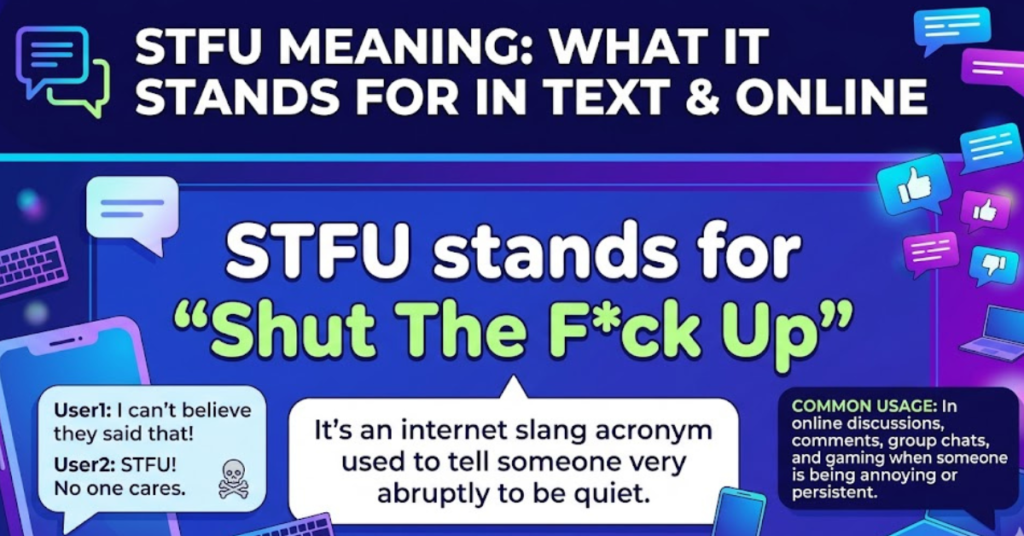
STFU stands for “Shut The F* Up.”**
It’s an internet slang abbreviation used to tell someone to stop talking. The phrase is considered informal and often rude, though it can sometimes be used jokingly between friends.
Key Points About STFU Meaning:
- It’s an acronym used in texting and online chats
- Usually expresses annoyance, disbelief, or joking banter
- Tone depends heavily on context
- Can be offensive if used in the wrong situation
STFU Meaning in Text
The STFU meaning in text messages often changes based on who is sending it. Among close friends, it might be playful. In heated discussions, it can sound harsh.
Examples of STFU in Text
- Friendly/Joking:
“You got free concert tickets? STFU, that’s amazing!” - Annoyed:
“You keep interrupting me. STFU and listen.” - Playful sarcasm:
“You ate the whole pizza? STFU ”
Context and emojis often soften the tone, especially in casual conversations.
Is STFU Rude?
Yes — STFU is generally considered rude. It’s a strong phrase because it literally tells someone to stop talking in a blunt way.
When It Might Be Acceptable
- Between close friends joking around
- In memes or humorous content
- When used sarcastically with emojis
When to Avoid Using STFU
- Professional communication
- Talking to strangers
- Formal or respectful conversations
- Sensitive discussions
Using it incorrectly can come across as aggressive or disrespectful.
Alternative Ways to Say STFU More Polite Options
If you want to express the same idea without sounding harsh, try these:
- “Can we change the topic?”
- “Let’s pause for a second.”
- “Give me a moment.”
- “Please stop.”
- “I get it, no need to continue.”
These alternatives keep communication respectful while still getting your point across.
Why Is STFU So Popular Online?
The STFU meaning became widely used due to:
- Short and easy to type
- Fits texting and social media culture
- Used in memes and viral posts
- Expresses strong emotions quickly
Internet slang thrives on brevity, and STFU is a perfect example.
STFU vs Other Similar Slang
Here’s how STFU compares with similar abbreviations:
- STFU – Shut The F*** Up (strong)
- STHU – Shut The Heck Up (milder)
- GTFO – Get The F*** Out (shock or disbelief)
- IDC – I Don’t Care (dismissive but softer)
Each one carries a slightly different tone.
FAQs About STFU Meaning
What does STFU mean in text?
STFU means “Shut The F*** Up.” It’s used to tell someone to stop talking, often in a joking or annoyed tone.
Is STFU offensive?
Yes, it can be offensive depending on context. It’s best used only with close friends who understand your tone.
Can STFU be used jokingly?
Yes. Many people use STFU humorously, especially with emojis or exaggeration.
What is a polite version of STFU?
You can say “please stop,” “hold on,” or “let’s change the topic” for a more respectful tone.
Is STFU appropriate for work?
No. It’s considered unprofessional and should be avoided in workplace communication.
Conclusion
Understanding the STFU meaning helps you navigate online conversations more confidently. While the STFU meaning in text is straightforward, its tone can shift from playful to rude depending on context. Use it carefully, especially outside close friendships, to avoid misunderstandings.