
If you’ve come across the term GPI meaning online or in banking documents, you might have wondered what it actually stands for. At the same time, many families are also searching for answers about a serious health concern: how dangerous is fluid on the lungs in elderly patients?
In this article, we’ll break down the GPI meaning in simple, human terms and also explore the medical reality of fluid in the lungs—how serious it can be, what causes it, and when it becomes an emergency. Let’s keep it clear, practical, and easy to understand.
What Is GPI Meaning? Simple Explanation
The term GPI meaning can vary depending on context, but the most widely recognized definition today is in the financial and banking world.
GPI Meaning in Banking SWIFT GPI
In international banking, GPI stands for “Global Payments Innovation.” It is a system developed by SWIFT (Society for Worldwide Interbank Financial Telecommunication).
Simply put, SWIFT GPI helps banks:
- Track international money transfers in real time
- Speed up cross-border payments
- Increase transparency in transaction fees
- Improve payment security and accuracy
So when someone refers to GPI meaning in banking, they are usually talking about a modern system that makes sending money across countries faster and more reliable.
Other Possible GPI Meanings
Outside banking, GPI can also mean different things depending on the field:
- Gross Private Investment (economics)
- Global Price Index (financial analysis)
- Genuine Progress Indicator (socio-economic studies)
However, in most modern searches, especially online banking and finance, SWIFT GPI is the most common meaning.
Why GPI Meaning Matters in Everyday Life
Understanding GPI meaning isn’t just technical—it actually affects real people.
For example:
- Businesses rely on it for international payments
- Freelancers receive faster cross-border transfers
- Families sending remittances get better tracking and safety
In short, it makes global money movement smoother and more transparent.
Fluid on the Lungs in Elderly: How Serious Is It?
Now shifting to a very different but important topic: fluid on the lungs in elderly patients.
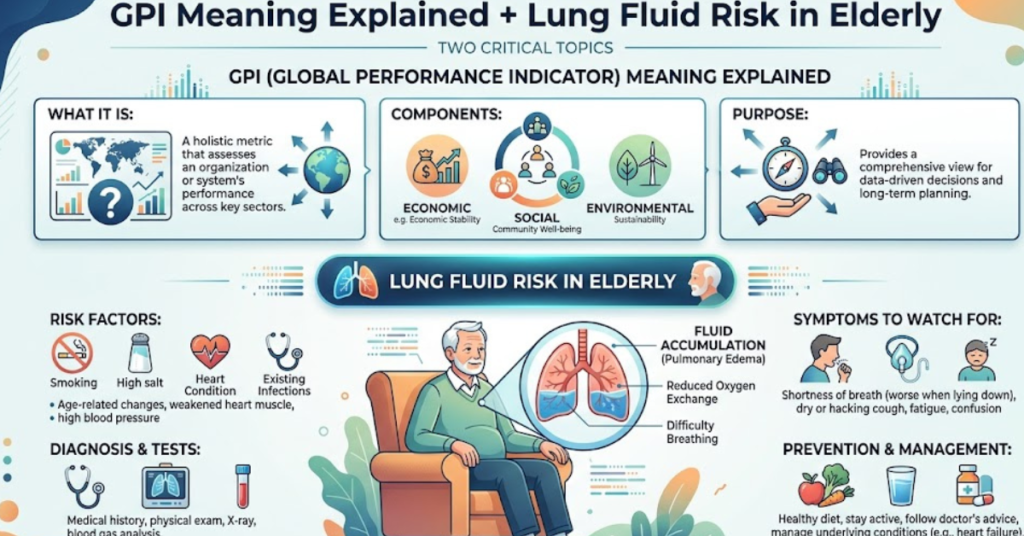
This condition is medically serious and should never be ignored. In simple terms, it means fluid has built up either inside the lungs or around them, making it difficult to breathe properly.
Medical Terms You May Hear
Doctors may describe this condition as:
- Pulmonary edema (fluid inside the lungs)
- Pleural effusion (fluid around the lungs)
Both conditions can reduce oxygen levels and strain the heart.
How Serious Is Fluid on the Lungs in Elderly?
The seriousness depends on the cause, but in elderly individuals, it is often considered a medical emergency or warning sign.
Why It Can Be Dangerous
Older adults are more vulnerable because:
- The heart and lungs may already be weakened
- Recovery from infections is slower
- Underlying diseases are more common
If untreated, fluid buildup can lead to:
- Severe breathing difficulty
- Low oxygen levels
- Heart failure complications
- Hospitalization or intensive care
Common Causes of Fluid on the Lungs
There are several reasons why this condition develops in elderly patients:
1. Heart Failure
The most common cause. When the heart cannot pump efficiently, fluid backs up into the lungs.
2. Lung Infections
Conditions like pneumonia can cause inflammation and fluid buildup.
3. Kidney Problems
Poor kidney function can lead to fluid retention in the body.
4. Liver Disease
Severe liver conditions may cause fluid imbalance.
5. Blood Clots or Severe Illness
These can also trigger sudden fluid accumulation.
Warning Signs You Should Never Ignore
If an elderly person shows these symptoms, immediate medical attention is needed:
- Shortness of breath (especially at rest)
- Wheezing or gasping for air
- Persistent cough (sometimes with frothy mucus)
- Chest discomfort
- Swelling in legs or feet
- Fatigue and confusion
Diagnosis and Treatment Options
Doctors typically use:
- Chest X-rays
- CT scans
- Blood tests
- Oxygen level monitoring
Treatment May Include:
- Diuretics (to remove excess fluid)
- Oxygen therapy
- Antibiotics (if infection is present)
- Heart medications
- In severe cases, draining fluid using a needle or tube
Early treatment greatly improves recovery chances.
GPI Meaning vs Medical Emergency: Why Both Matter Here
At first glance, GPI meaning and fluid on the lungs in elderly seem unrelated. But both highlight something important: clarity of information.
- One relates to financial systems that affect global communication
- The other involves health awareness that can save lives
Understanding both helps you stay informed in different areas of life—finance and health.
FAQs About GPI Meaning and Fluid on the Lungs
1. What is the full form of GPI?
In banking, GPI stands for Global Payments Innovation, used in international money transfers.
2. Is GPI only used in banking?
No. It can also mean other terms like Gross Private Investment or Global Price Index depending on context.
3. How serious is fluid on the lungs in elderly people?
It is very serious and can become life-threatening if not treated quickly.
4. Can fluid on the lungs be cured?
Yes, but treatment depends on the cause. Early diagnosis improves outcomes significantly.
5. What is the difference between pulmonary edema and pleural effusion?
Pulmonary edema is fluid inside the lungs, while pleural effusion is fluid around the lungs.
Conclusion
Understanding GPI meaning helps you navigate modern financial systems, especially international payments where speed and transparency matter. On the other hand, recognizing how serious fluid on the lungs in elderly patients can be is crucial for timely medical action.