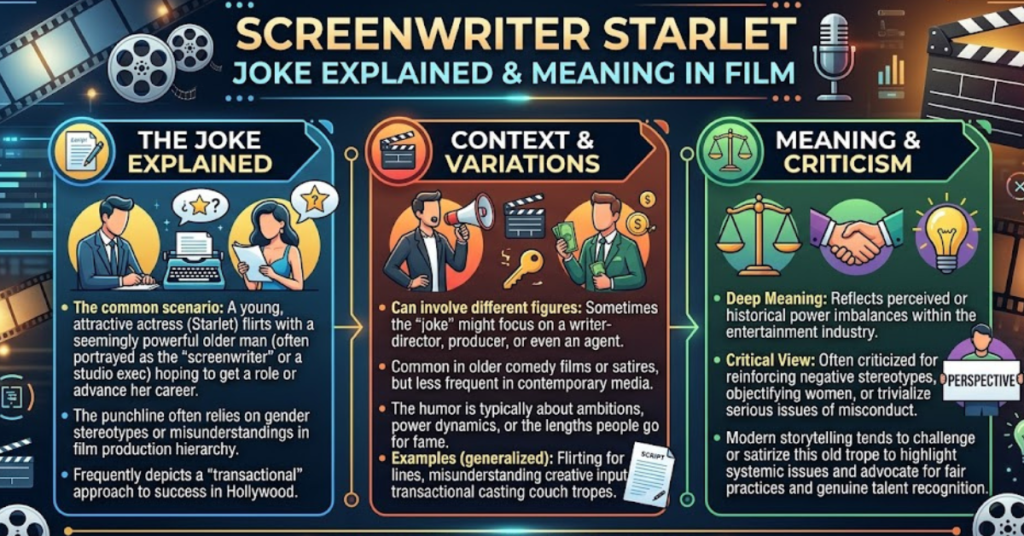

The screenwriter starlet joke has become a recurring piece of Hollywood humor that pops up in film discussions, writing circles, and industry satire. At its core, the screenwriter starlet joke plays on the contrast between creative storytelling and glamorous celebrity culture.
In simple terms, the screenwriter starlet joke highlights the tension between the person who writes the story and the starlet who brings it to life on screen. It’s funny, a bit ironic, and often used to comment on how credit, fame, and recognition are distributed in the film industry.
What Is the Screenwriter Starlet Joke?
The screenwriter starlet joke is not a single fixed joke but a category of Hollywood humor. It usually involves a witty or ironic scenario where:
- A screenwriter creates a powerful script
- A starlet (young actress or rising actress) becomes the face of the story
- The public remembers the star, not the writer
This creates a comedic imbalance that writers in Hollywood often joke about.
Common Themes in the Joke
- Misplaced fame in the film industry
- Writers being “invisible” behind the scenes
- Star power overshadowing storytelling
- Hollywood ego and recognition gaps
Screenwriter Starlet Joke in Hollywood Satire
In Hollywood satire, the screenwriter starlet joke often appears in dialogue, interviews, or fictional scenes. It reflects real frustrations within the industry while keeping things light and humorous.
Why It Works as Humor
The joke lands because it is relatable and exaggerated:
- Screenwriters spend months or years crafting stories
- Starlets gain instant recognition after a film release
- Audiences often forget who actually wrote the screenplay
This irony is what fuels the comedy.
Film Industry Reality Behind the Joke
While the screenwriter starlet joke is humorous, it is rooted in real industry dynamics.
Behind-the-Scenes vs On-Screen Fame
- Screenwriters: Work privately, often under tight deadlines
- Starlets: Appear in promotional campaigns, interviews, and red carpets
- Studios: Market actors more than writers
Resulting Imbalance
This creates a visibility gap that the joke exaggerates for comedic effect.
Why Screenwriters Use This Joke
Writers often use the screenwriter starlet joke as a coping mechanism and a form of self-aware humor.
Common reasons include:
- To highlight lack of recognition
- To bond with other writers
- To critique Hollywood culture indirectly
- To turn frustration into comedy
Screenwriter Starlet Joke in Modern Media
Today, the joke appears in:
- Film school discussions
- Stand-up comedy routines
- Social media film commentary
- Behind-the-scenes interviews
It has evolved from a niche industry joke into a broader commentary on fame culture.
LSI Keywords Related to Screenwriter Starlet Joke
To understand the topic better, here are related concepts:
- Hollywood screenwriting humor
- film industry satire
- screenplay writer recognition
- celebrity culture jokes
- behind-the-scenes filmmaking
- writer vs actor fame dynamics
FAQs About Screenwriter Starlet Joke
1. What does the screenwriter starlet joke mean?
It refers to humorous commentary about how screenwriters create stories while starlets receive most of the public attention.
2. Is the screenwriter starlet joke a real joke or a concept?
It’s more of a recurring theme in Hollywood humor rather than a single defined joke.
3. Why is the screenwriter starlet jokes popular?
Because it reflects real industry imbalance between creative work and celebrity recognition.
4. Who usually tells the screenwriter starlet jokes?
Screenwriters, filmmakers, and film critics often reference it in discussions or satire.
5. Does the jokes criticize Hollywood?
Yes, but in a light and humorous way—it highlights industry dynamics rather than attacking individuals.
Conclusion: What the Screenwriter Starlet Jokes Really Tells Us
The screenwriter starlet joke is more than just humor—it’s a reflection of how storytelling and fame interact in Hollywood. While starlets often become the face of a film, screenwriters remain the unseen architects behind the story.
Understanding this joke gives insight into the creative imbalance of the film industry and why writers continue to use humor to express it. If you’re interested in film culture, exploring more Hollywood satire and screenplay dynamics can offer even deeper appreciation of how movies are really made.