
The phrase “rabe meaning slang” has been appearing in searches lately, leaving many people confused about what it actually means. In slang language, words often shift meaning depending on culture, region, and online usage, which makes “rabe” a bit tricky to pin down.
In this article, we’ll break down the possible rabe meaning slang, explore where it might come from, and then shift into something just as important—personal life values and why they matter in shaping who we are.
Understanding both language and values helps us communicate better and live more intentionally.
What Does “Rabe Meaning Slang” Actually Mean?
The keyword rabe meaning slang doesn’t have one fixed definition in mainstream English slang dictionaries. Instead, it appears in different contexts with possible interpretations:
1. Possible Misinterpretation or Typo
In many cases, “rabe” may be:
- A typo for “rave” (meaning to talk enthusiastically or a party scene)
- A misspelling of names or foreign words
- A localized slang term used in specific communities
2. Regional or Online Usage
On social media platforms, slang evolves quickly. “Rabe” might be:
- A username or nickname adopted into slang use
- A coded or inside joke term in certain groups
- A word borrowed from another language with altered meaning
3. Linguistic Confusion
Some users search rabe meaning slang simply because they encountered the word without context. In such cases, meaning depends entirely on where it was seen.
Key takeaway: “Rabe” is not a universally recognized slang word in English, and its meaning depends heavily on context.
Why Slang Words Like “Rabe” Can Be Confusing
Slang is constantly changing, especially online. Words can:
- Shift meaning overnight
- Be used differently across countries
- Originate from memes, jokes, or niche communities
This is why searching rabe meaning slang often leads to unclear answers—because slang is fluid, not fixed.
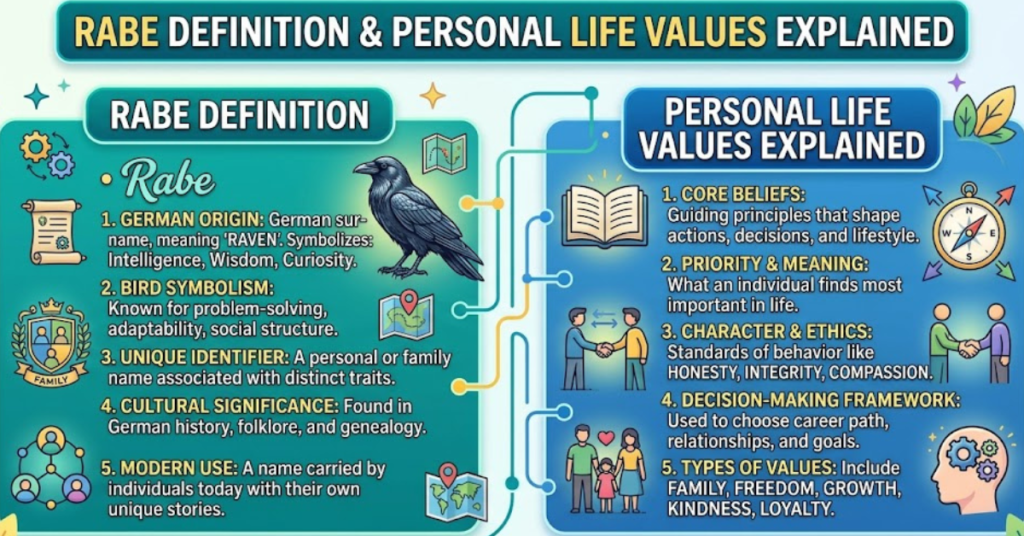
Personal Life Values: What Really Shapes Us
While understanding slang is useful, knowing your personal life values is even more important. These values guide decisions, behavior, and long-term goals.
Here are some core personal life values many people live by:
1. Honesty
Being truthful builds trust in relationships and personal integrity.
2. Respect
Respecting others’ opinions, cultures, and boundaries creates healthier interactions.
3. Responsibility
Taking accountability for actions leads to personal growth and maturity.
4. Discipline
Consistency in habits helps achieve long-term success.
5. Kindness
Small acts of kindness often have a big emotional impact on others.
6. Growth Mindset
Believing you can improve keeps you motivated to learn and evolve.
How Life Values Influence Daily Decisions
Your values quietly shape everything you do, such as:
- The friends you choose
- How you handle stress
- Your work ethic
- Your communication style
For example, someone who values honesty will naturally avoid misleading others, even in difficult situations.
Connecting Slang and Personal Values
At first, rabe meaning slang and personal life values may seem unrelated, but they connect in one key way: communication.
- Slang reflects how people express identity and culture
- Values reflect how people behave and make decisions
Both influence how we understand and interact with the world.
FAQs About “Rabe Meaning Slang” and Life Values
What does rabe mean in slang?
There is no widely accepted slang definition of “rabe.” It may be a typo, nickname, or context-specific term.
Is “rabe” a real English word?
Yes, but in standard English, “rabe” is not commonly used as slang. It may appear in names or non-slang contexts.
Why do slang words change meaning?
Slang evolves due to internet culture, social media, and regional language differences.
What are examples of personal life values?
Common values include honesty, respect, responsibility, kindness, and discipline.
Why are personal values important?
They guide decision-making, shape personality, and influence long-term success.
Conclusion
The search for rabe meaning slang shows how language can sometimes be confusing and context-dependent. While “rabe” doesn’t have a clear universal slang definition, it highlights how quickly modern communication evolves.
On the other hand, personal life values remain steady and powerful. They shape who we are far more than any slang term ever could. By understanding both language and values, we improve not just communication—but also character.
If you’re interested in learning more about language trends or self-development topics, exploring both areas together can give you a deeper understanding of how people think and express themselves today.