
You’ve probably seen both spellings floating around online—studder and stutter. It’s a small difference, but it raises a big question: which one is actually correct? If you’ve ever paused mid-search wondering is it studder or stutter, you’re not alone.
In this article, we’ll clear up the confusion and go beyond spelling. We’ll explore what stuttering really is, why it happens, and how it can be managed. Whether you’re here out of curiosity or personal experience, you’ll find practical, easy-to-understand insights.
Studder or Stutter: Which Is Correct?
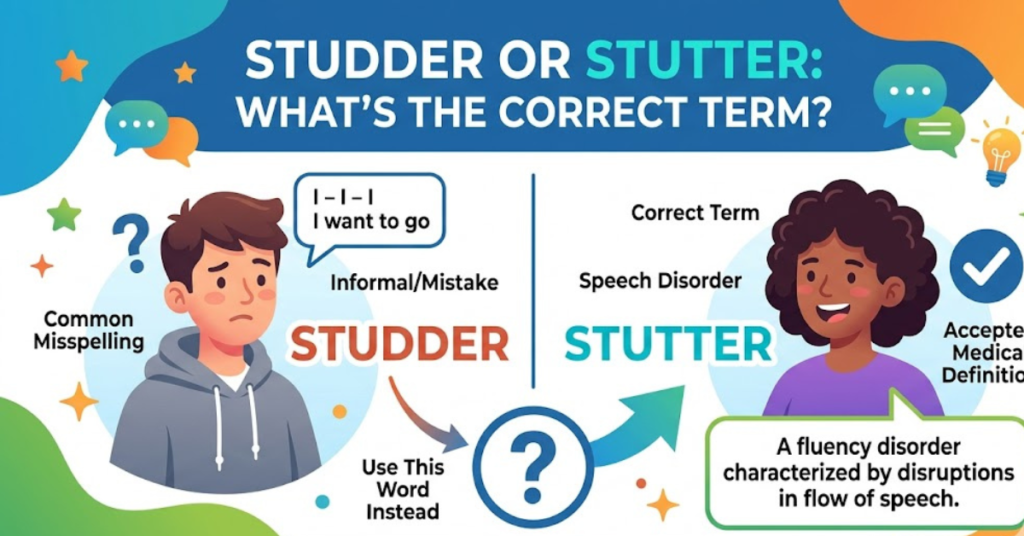
Let’s settle this right away: “stutter” is the correct spelling.
“Studder” is simply a common misspelling. While people often use both terms interchangeably in casual searches, only stutter is recognized in standard English dictionaries and medical contexts.
So, if you’re writing, researching, or speaking formally, stutter is the word you want.
What Is Stuttering?
Stuttering is a speech disorder that affects the natural flow of speech. People who stutter may:
- Repeat sounds or syllables (e.g., “b-b-ball”)
- Prolong sounds (e.g., “ssssun”)
- Experience blocks where no sound comes out
It’s not about intelligence or confidence—it’s a neurological and developmental condition that varies widely from person to person.
Common Causes of Stuttering
Stuttering doesn’t have a single cause. Instead, it’s usually linked to a combination of factors:
1. Genetics
If someone in your family stutters, the chances are higher that you might too.
2. Brain Function
Differences in how the brain processes speech and language can contribute to stuttering.
3. Developmental Factors
Many children go through a phase of disfluency as they learn to speak. For some, it develops into a persistent stutter.
4. Emotional Triggers
Stress, anxiety, or pressure can make stuttering more noticeable, though they don’t cause it directly.
Signs and Symptoms
Stuttering looks different for everyone, but common signs include:
- Frequent repetition of words or sounds
- Pauses or blocks during speech
- Visible tension in the face or body while speaking
- Avoidance of certain words or speaking situations
Some people also develop coping behaviors, like substituting words or avoiding eye contact.
How Is Stuttering Diagnosed?
A speech-language pathologist (SLP) usually evaluates stuttering. The process may include:
- Reviewing speech patterns
- Assessing frequency and severity
- Understanding emotional and social impact
Early diagnosis, especially in children, can make a big difference in long-term outcomes.
Treatment and Management Options
While there’s no one-size-fits-all cure, stuttering can be effectively managed.
Speech Therapy
This is the most common and effective approach. Techniques may include:
- Slowing down speech
- Controlled breathing
- Gentle speech initiation
Cognitive Behavioral Therapy (CBT)
Helps address anxiety or negative thoughts related to speaking.
Support Groups
Connecting with others who stutter can reduce isolation and build confidence.
Parental Support (for children)
Simple changes at home—like listening patiently and avoiding interruptions—can help a lot.
Tips for Communicating with Someone Who Stutters
If you interact with someone who stutters, keep these in mind:
- Be patient—don’t finish their sentences
- Maintain natural eye contact
- Focus on what they’re saying, not how they’re saying it
- Avoid rushing or pressuring them
Respect and understanding go a long way.
Living with a Stutter
Many people who stutter lead successful, fulfilling lives. In fact, several well-known public figures have openly discussed their experiences with stuttering.
The key isn’t “perfect speech”—it’s effective communication and self-confidence.
FAQs
Is it studder or stutter?
The correct spelling is stutter. “Studder” is a common misspelling.
Is stuttering a disability?
It can be classified as a speech disorder and, in some cases, a disability—especially if it significantly impacts daily life.
Can stuttering go away on its own?
In young children, it sometimes resolves naturally. However, persistent stuttering may require therapy.
What age does stuttering usually start?
It often begins between ages 2 and 5 during early language development.
Can adults develop a stutter?
Yes, though it’s less common. Adult-onset stuttering may be linked to neurological events or emotional trauma.
Conclusion
So, next time you find yourself wondering is it studder or stutter, you’ll know the answer: stutter is correct. But beyond spelling, understanding the condition itself is what truly matters.
Stuttering is more common than many realize, and with the right support, it can be managed effectively. If you or someone you know is dealing with it, consider exploring speech therapy or supportive communities.
Clear communication isn’t about perfection—it’s about connection.