
If you’ve ever paused mid-sentence wondering whether to use sense vs since, you’re not alone. These two words sound somewhat similar in casual speech, but their meanings and grammar roles are completely different. Understanding the sense vs since definition is essential for clear writing, especially in English grammar, emails, essays, and everyday communication.
At first glance, “sense” and “since” may seem interchangeable to beginners, but mixing them up can change the meaning of a sentence entirely. In this guide, we’ll break it down in a simple, practical way so you never confuse them again.
What Does “Sense” Mean?
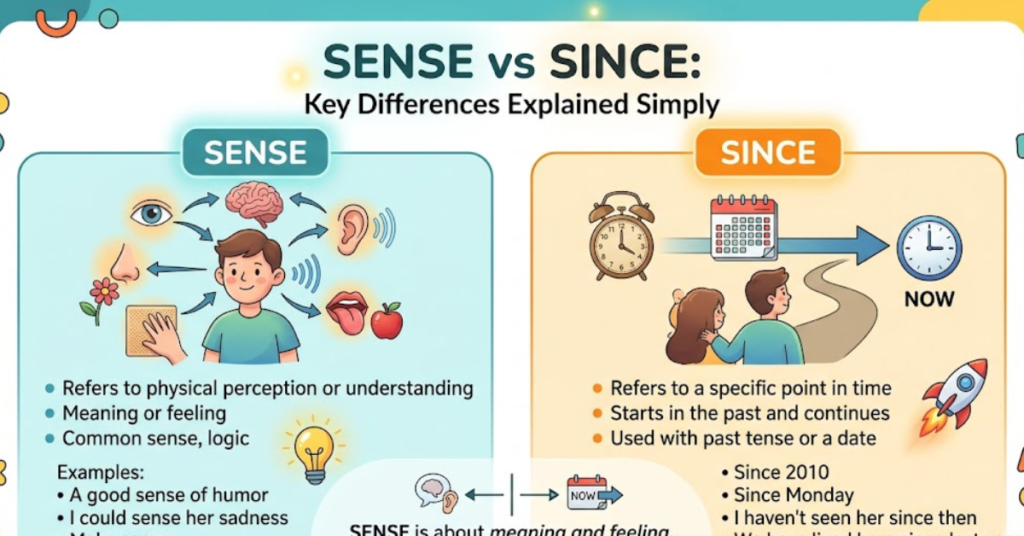
The word “sense” is primarily used as a noun and sometimes a verb. It refers to perception, meaning, or logical understanding.
Common meanings of “sense”:
- Meaning or understanding:
“That doesn’t make sense.” - Physical perception (five senses):
sight, hearing, touch, taste, smell - Intuition or judgment:
“She has a good sense of direction.”
Examples of “sense” in sentences:
- I can’t make sense of this instruction.
- He has a strong sense of responsibility.
- Dogs have a better sense of smell than humans.
In short, “sense” relates to meaning, logic, or perception.
What Does “Since” Mean?
The word “since” is mostly used as a conjunction, preposition, or adverb. It usually refers to time or reason.
Two main uses of “since”:
1. Time reference from a point in the past until now
- I have lived here since 2015.
- She hasn’t called me since Monday.
2. Reason or cause because
- Since you’re here, let’s start the meeting.
- I stayed home since I was feeling sick.
So, “since” connects time or explains a reason.
Sense vs Since Definition Simple Comparison
To make the sense vs since definition crystal clear, here’s a quick breakdown:
| Word | Type | Meaning | Example |
| Sense | Noun/Verb | Meaning, feeling, or perception | That makes no sense |
| Since | Conjunction/Preposition | Time or reason | I’ve been here since morning |
Sense vs Since: Key Differences Explained
Understanding sense vs since becomes easy when you focus on their roles in a sentence.
1. Meaning Difference
- Sense: related to understanding or perception
- Since: related to time or cause
2. Grammar Function
- Sense: noun or verb
- Since: conjunction, preposition, or adverb
3. Usage Context
- Use sense when talking about logic or feelings
- Use since when talking about time or reasons
Common Mistakes People Make
Many learners confuse these words because of spelling and pronunciation similarity. Here are frequent errors:
- “It doesn’t since right.”
“It doesn’t sense right.” - “I didn’t see you sense Monday.”
“I didn’t see you since Monday.” - “Make since of this.”
“Make sense of this.”
A simple trick:
If you can replace the word with “understand,” use sense. If it relates to time or “because,” use since.
Easy Memory Trick
To avoid confusion between sense vs since, try this:
- Sense = Think / Understand
- Since = Start of time or reason
This mental shortcut works surprisingly well in writing and conversation.
Real-Life Usage Examples
Let’s see both words in natural contexts:
Using “sense”:
- This explanation finally makes sense.
- I have a strong sense that something is wrong.
Using “since”:
- I’ve been working here since 2020.
- Since it’s raining, we canceled the trip.
When you compare them side by side, the difference becomes obvious.
Why Understanding “Sense vs Since” Matters
Mastering sense vs since definition is not just grammar trivia. It improves:
- Writing clarity in emails and essays
- Confidence in speaking English
- Performance in exams and tests
- Professional communication skills
Even small grammar mistakes can change how others perceive your language ability, so getting these basics right matters more than you think.
FAQs: Sense vs Since
1. What is the main difference between sense and since?
Sense refers to meaning or understanding, while since refers to time or reason.
2. Can “since” be used instead of “because”?
Yes, in informal English, “since” can mean “because.”
Example: Since you’re busy, I’ll call later.
3. Is “sense vs since definition” important for exams?
Absolutely. Many grammar tests include confusing word pairs like this.
4. Why do people confuse sense and since?
Because they sound similar and are often used in everyday speech, but their meanings are unrelated.
5. How can I remember the difference easily?
Think: Sense = Understand, Since = Time/Reason.
Conclusion
Understanding sense vs since is a simple but powerful step toward improving your English grammar. While “sense” deals with meaning and understanding, “since” connects time or explains reasons. Knowing the sense vs since definition helps you avoid common mistakes and communicate more clearly in both writing and speech.
If you want to strengthen your grammar further, keep practicing with real sentences and pay attention to how native speakers use these words. Small improvements like this build strong language skills over time.