
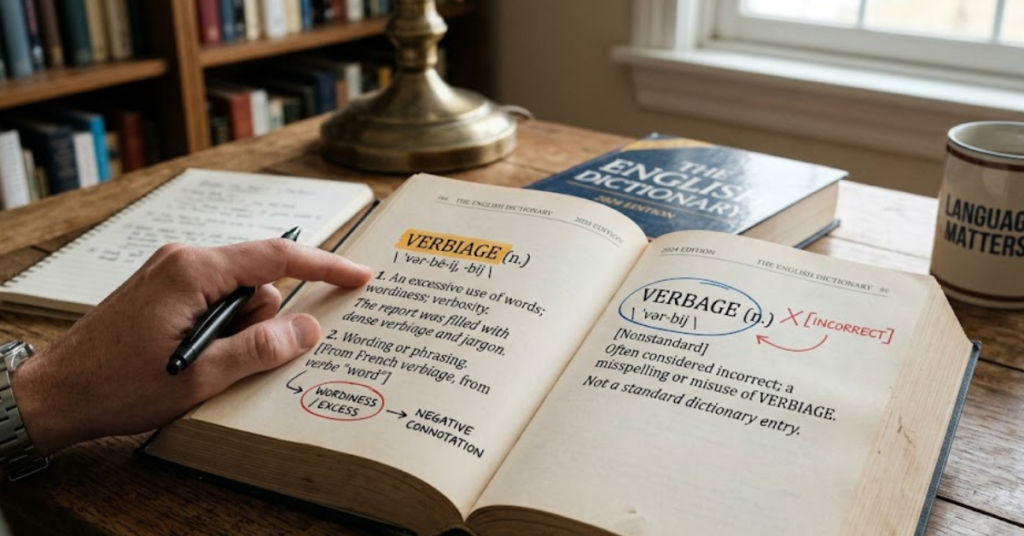

Have you ever typed “verbage” into a document only to see a red underline appear instantly? You’re not alone. The debate around verbiage vs verbage is surprisingly common, especially among writers, students, marketers, and professionals who work with language every day.
At first glance, the two words seem interchangeable. They sound nearly identical, and many people use them in casual conversation without realizing there’s an important distinction. But when it comes to correct English usage, only one of these terms is officially recognized in standard dictionaries.
In this guide, we’ll break down the verbiage vs verbage definition, explain the origins of the words, show examples of proper usage, and help you avoid a mistake that can weaken your writing credibility.
What Does “Verbiage” Mean?
The word verbiage is a legitimate English noun. Traditionally, it refers to:
- Excessive or unnecessary wording
- Overly complicated language
- The specific wording used in a text or speech
Simple Verbiage Definition
Verbiage means the way something is worded, often with an implication that there are too many words involved.
Example Sentences
- The contract’s legal verbiage confused most readers.
- Try to reduce unnecessary verbiage in your essay.
- Marketing verbiage can sometimes sound overly complicated.
Originally, the word carried a somewhat negative tone because it implied wordiness or fluff. However, modern usage has softened, and many people now use it simply to mean “wording” or “text.”
Is “Verbage” a Real Word?
Here’s where the confusion begins.
Technically, verbage is considered a misspelling or nonstandard variation of verbiage. Most dictionaries do not recognize it as correct formal English.
Why People Use “Verbage”
The spelling “verbage” likely developed because:
- It sounds simpler phonetically
- People associate it with words like:
- coverage
- baggage
- mileage
- Spoken English often drops subtle syllable distinctions
Even though many people say or write “verbage,” it’s generally viewed as incorrect in professional writing.
Verbiage vs Verbage Definition
Let’s compare the two side by side.
| Term | Correct? | Meaning | Professional Usage |
| Verbiage | Yes | Wording or excessive wording | Accepted |
| Verbage | No (nonstandard) | Intended misspelling of verbiage | Usually avoided |
If you’re writing anything formal—emails, articles, academic papers, resumes, or business documents—you should always choose verbiage.
Why the Confusion Between Verbiage vs Verbage Happens
English is filled with words that sound alike but follow unusual spelling patterns. The confusion between verbiage vs verbage mostly comes from pronunciation habits.
Common Reasons People Write “Verbage”
- They’ve only heard the word spoken aloud
- Autocorrect sometimes misses contextual errors
- Informal online writing spreads alternate spellings
- The spelling “verbage” appears more intuitive
This type of spelling confusion is extremely common in English. Similar examples include:
- definitely vs definately
- separate vs seperate
- judgment vs judgement
The History of the Word “Verbiage”
The word verbiage comes from the French word verbiage, which itself traces back to Latin roots related to “words” and “speech.”
Historically, it described language that was overly elaborate or verbose. Over time, English speakers began using it more casually to describe any type of wording.
Older Meaning
- Excessive language
- Wordy communication
Modern Meaning
- Wording in general
- Text phrasing
- Specific terminology
Today, context determines whether the term sounds negative or neutral.
How to Use “Verbiage” Correctly
Using the word naturally can improve clarity in professional communication.
Correct Examples
In Business Writing
- Please review the legal verbiage before signing the agreement.
In Academic Writing
- The essay contained unnecessary verbiage that weakened the argument.
In Marketing
- The website’s promotional verbiage felt too sales-heavy.
Incorrect Example
- Please simplify the verbage in the report.
Correct version:
- Please simplify the verbiage in the report.
Is “Verbiage” Always Negative?
Not necessarily.
Traditionally, “verbiage” criticized language for being too wordy. But modern speakers often use it neutrally.
Negative Usage
- The article was full of meaningless corporate verbiage.
Neutral Usage
- We updated the verbiage on the homepage.
This shift in meaning is common in evolving languages. Context matters more than strict historical definitions.
Alternatives to the Word “Verbiage”
Sometimes simpler words work better.
Synonyms for Verbiage
- wording
- phrasing
- terminology
- language
- text
- vocabulary
- expression
Example
Instead of:
- The legal verbiage was difficult to understand.
You could say:
- The legal wording was difficult to understand.
In many cases, “wording” sounds cleaner and more conversational.
Verbiage vs Verbage in Professional Writing
If you work in a professional environment, spelling matters more than many people realize.
Using “verbage” can:
- Reduce credibility
- Trigger grammar-checking software
- Make writing appear less polished
- Distract readers from your message
Best Practice
Always use:
Verbiage
Avoid:
Verbage
This is especially important in:
- resumes
- business proposals
- academic papers
- blog content
- legal documents
- professional emails
Grammar Experts on Verbiage vs Verbage
Most major dictionaries and style guides agree on one thing:
“Verbiage” is the standard spelling.
“Verbage” may appear occasionally in informal communication, but it’s rarely accepted in edited or professional English.
Dictionary Status
| Dictionary | Verbiage | Verbage |
| Merriam-Webster | Accepted | Nonstandard |
| Oxford English Dictionary | Accepted | Rare/incorrect |
| Cambridge Dictionary | Accepted | Not standard |
Tips to Remember the Correct Spelling
Need a quick memory trick?
Think of “Verbose”
Both words share the same root idea related to words and excessive language.
- verbose
- verbosity
- verbiage
Notice they all contain “iage” instead of “age.”
That can help you remember the correct spelling quickly.
Common Mistakes Related to Verbiage
Here are a few writing habits to avoid.
1. Using Verbiage Excessively
Ironically, people sometimes use “verbiage” while writing overly complicated sentences.
Example
- Due to the implementation of extensive procedural verbiage…
Simpler is often better.
2. Using It as a Fancy Replacement for “Words”
Not every sentence needs the term.
Better Alternative
Instead of:
- Adjust the verbiage.
Try:
- Adjust the wording.
Clear writing usually beats complicated wording.
FAQs About Verbiage vs Verbage
Is “verbage” officially a word?
Most dictionaries consider “verbage” a misspelling or nonstandard version of “verbiage.” It’s not recommended in formal writing.
What is the correct spelling: verbiage or verbage?
The correct spelling is verbiage.
What does verbiage mean?
Verbiage refers to wording, phrasing, or language—often with an implication of unnecessary complexity or excess.
Why do people say “verbage”?
People often spell it phonetically because the pronunciation sounds similar to words ending in “-age.”
Can I use “verbage” in professional writing?
It’s best to avoid it. Use “verbiage” instead to maintain professionalism and grammatical accuracy.
Is verbiage a negative word?
Not always. Historically it had a negative meaning related to wordiness, but today it’s often used neutrally to describe wording.
Conclusion
Understanding the difference between verbiage vs verbage is simple once you know the rules. Verbiage is the correct and widely accepted spelling, while verbage is generally considered incorrect or nonstandard.
Although the two sound almost identical, using the proper spelling can make your writing look more polished and professional. Whether you’re drafting a business email, writing blog content, or preparing an academic paper, choosing “verbiage” helps you communicate with clarity and credibility.