
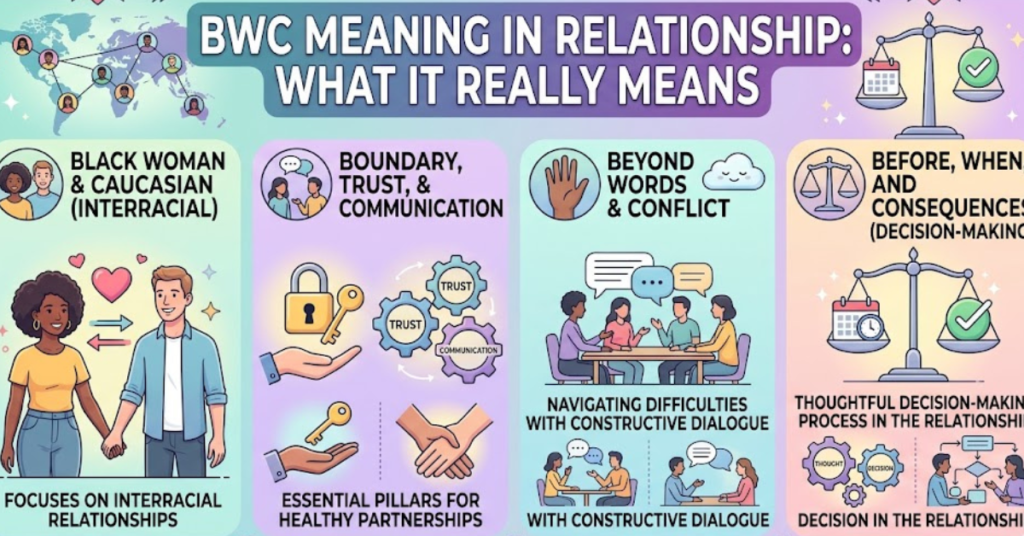

If you’ve seen the term BWC meaning in relationship pop up in texts, dating apps, or social media, you’re not alone. Slang evolves fast, and understanding it can help avoid awkward misunderstandings. In relationships, abbreviations often carry layered meanings depending on context. This article breaks down what BWC means in a relationship, where it comes from, how it’s used, and what you should know before reacting.
Whether you’re curious, confused, or just trying to stay updated with modern dating language, this guide will give you a clear, balanced explanation.
What Does BWC Mean in a Relationship?
BWC typically stands for “Big White C*”** in adult slang. It’s most commonly used in sexual or intimate contexts when people discuss physical attraction or preferences.
However, context matters. In conversations about relationships, the term may be:
- Used jokingly
- Used flirtatiously
- Used in explicit or adult discussions
- Referenced in online dating bios
Because it’s explicit, it’s not considered formal or appropriate in professional communication.
Origins of BWC in Dating and Relationship Culture
The BWC meaning in relationship discussions largely originate from:
- Online forums
- Dating apps (like Tinder, Bumble, etc.)
- Adult entertainment terminology
- Social media slang
Over time, it crossed into mainstream texting and casual conversations, especially among younger audiences.
How BWC Is Used in Relationship Conversations
Here are common ways the term might appear:
1. Flirty or Suggestive Messaging
Someone might use it as part of flirtation, implying attraction or teasing.
2. Dating App Profiles
Some people include it in bios to signal preferences or humor (though it’s controversial).
3. Jokes Among Friends
Sometimes it’s used sarcastically or humorously without serious intent.
Should You Be Concerned If Someone Uses BWC?
Not necessarily — but context matters. Consider:
- Your relationship dynamic
- Tone of the conversation
- Whether the discussion is appropriate
- Your personal comfort level
If it makes you uncomfortable, it’s okay to set boundaries. Healthy relationships rely on clear communication.
Alternative Meanings of BWC (Rare Cases)
Although rare, BWC can sometimes mean:
- Body Weight Control
- Better With Coffee
- Business Writing Course
However, in relationship or dating contexts, the adult slang meaning is most common.
When to Avoid Using BWC
It’s best not to use this term in:
- Professional communication
- Early-stage dating conversations
- Formal texts
- Family-friendly settings
Using it incorrectly could lead to awkward misunderstandings.
How to Respond If Someone Uses BWC
You can respond in a few ways:
- Ask for clarification
- Ignore it if irrelevant
- Set boundaries politely
- Respond humorously (if appropriate)
Example:
“Hey, I’m not really comfortable with that kind of slang — let’s keep it respectful.”
FAQs About BWC Meaning in Relationship
1. Is BWC a common relationship term?
Yes, it appears frequently in online dating and casual texting, but it’s not universally used.
2. Is BWC offensive?
It can be considered explicit or inappropriate depending on context and audience.
3. Does BWC always have a sexual meaning?
In relationship contexts, most of the time yes — but context still matters.
4. Should I use BWC in conversations?
Only if you’re sure the other person is comfortable with that kind of slang.
5. Why do people use BWC in dating apps?
Usually to express humor, attraction, or preferences in a shorthand way.
Conclusion
Understanding the BWC meaning in relationship conversations helps you navigate modern dating language with confidence. While the term is widely used in informal settings, it’s important to consider tone, context, and comfort levels before using or reacting to it.
Clear communication and mutual respect always matter more than slang. If you’re unsure, asking for clarification is the safest approach.