
Ever typed a word, paused, and thought—that doesn’t look right? If you’ve found yourself wondering immaculate or emaculate, you’re definitely not alone. It’s a common spelling confusion that trips up even confident writers. In this article, we’ll clear up the confusion around immaculate or emaculate meaning, explain the correct usage, and give you simple ways to remember it. By the end, you’ll never second-guess this word again. Immaculate or Emaculate: Which Is Correct? Let’s get straight to the point: “immaculate” is the correct spelling. “Emaculate” is a misspelling and isn’t recognized in standard English dictionaries. If you’re asking is it immaculate or emaculate, the answer is always immaculate. This word is widely used in both everyday language and formal writing, so it’s worth getting it right. Immaculate Meaning Explained Now that we’ve settled the spelling, let’s look at what immaculate actually means. Immaculate generally refers to something that is: Perfectly clean or spotless Free from mistakes or flaws Neat, tidy, and well-organized Example Sentences Her room was absolutely immaculate, with everything in its place. He gave an immaculate performance during the presentation. The car looked immaculate, as if it had just come out of the showroom. In simple terms, the word describes something close to perfection. Why Do People Confuse Emaculate with Immaculate? If “emaculate” is incorrect, why do so many people use it? Here are a few reasons: 1. Pronunciation Confusion When spoken quickly, immaculate can sound like it starts with an “e” instead of an “i.” 2. Spelling Patterns English has many words starting with “em-,” which makes “emaculate” seem plausible. 3. Typing Errors It’s an easy slip of the fingers when typing fast. Understanding these reasons makes it easier to avoid the mistake. How to Remember the Correct Spelling Struggling to remember is it immaculate or emaculate? Try these simple tricks: Think “I’m immaculate” — associating the word with “I’m” helps you remember it starts with “im.” Double ‘m’ matters — the correct word has two “m” letters. Visual memory — picture something perfectly clean and label it “immaculate.” These small hacks can make a big difference. Common Contexts Where “Immaculate” Is Used You’ll often see or hear immaculate in different situations, such as: Cleanliness Immaculate home Immaculate clothes Performance Immaculate execution Immaculate timing Appearance Immaculate design Immaculate presentation It’s a versatile word that works in both casual and professional settings. Similar Words and Synonyms To deepen your understanding, here are some synonyms of immaculate: Spotless Flawless Pristine Perfect Neat While these words are similar, immaculate often carries a stronger sense of perfection. FAQs Immaculate or emaculate—what’s correct? The correct spelling is immaculate. “Emaculate” is incorrect. What is the meaning of immaculate or emaculate meaning? Immaculate means perfectly clean, flawless, or without mistakes. Is it immaculate or emaculate in formal writing? Always use immaculate in formal and informal writing. Why do people say emaculate? It’s usually due to pronunciation confusion or simple spelling mistakes. Can immaculate describe a person? Yes, it can describe someone’s appearance, behavior, or performance as flawless. Conclusion So, the next time you hesitate between immaculate or emaculate, remember this: immaculate is the only correct spelling. Beyond just spelling, it’s a powerful word that conveys cleanliness, precision, and perfection. Getting small details like this right can make your writing look more polished and professional. Keep learning, stay curious, and don’t be afraid to double-check—because even tiny improvements can lead to immaculate results.

Immaculate or Emaculate: Correct Spelling Guide

Ever typed a word, paused, and thought—that doesn’t look right? If you’ve found yourself wondering immaculate or emaculate, you’re definitely not alone. It’s a common spelling confusion that trips up even confident writers.

In this article, we’ll clear up the confusion around immaculate or emaculate meaning, explain the correct usage, and give you simple ways to remember it. By the end, you’ll never second-guess this word again.

Immaculate or Emaculate: Which Is Correct?

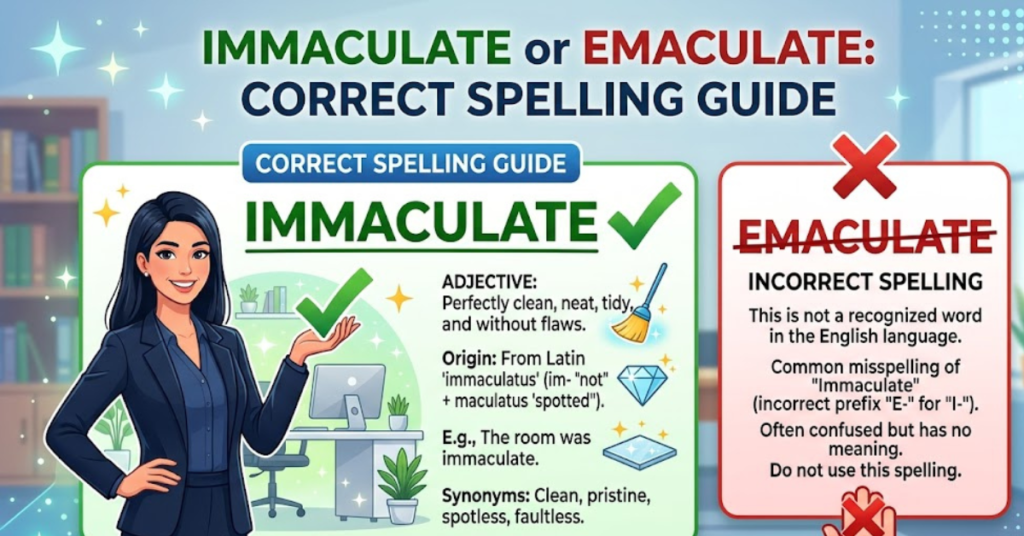
Let’s get straight to the point: “immaculate” is the correct spelling.

“Emaculate” is a misspelling and isn’t recognized in standard English dictionaries. If you’re asking is it immaculate or emaculate, the answer is always immaculate.

This word is widely used in both everyday language and formal writing, so it’s worth getting it right.

Immaculate Meaning Explained

Now that we’ve settled the spelling, let’s look at what immaculate actually means.

Immaculate generally refers to something that is:

  • Perfectly clean or spotless
  • Free from mistakes or flaws
  • Neat, tidy, and well-organized

Example Sentences

  • Her room was absolutely immaculate, with everything in its place.
  • He gave an immaculate performance during the presentation.
  • The car looked immaculate, as if it had just come out of the showroom.

In simple terms, the word describes something close to perfection.

Why Do People Confuse Emaculate with Immaculate?

If “emaculate” is incorrect, why do so many people use it? Here are a few reasons:

1. Pronunciation Confusion

When spoken quickly, immaculate can sound like it starts with an “e” instead of an “i.”

2. Spelling Patterns

English has many words starting with “em-,” which makes “emaculate” seem plausible.

3. Typing Errors

It’s an easy slip of the fingers when typing fast.

Understanding these reasons makes it easier to avoid the mistake.

How to Remember the Correct Spelling

Struggling to remember is it immaculate or emaculate? Try these simple tricks:

  • Think “I’m immaculate” — associating the word with “I’m” helps you remember it starts with “im.”
  • Double ‘m’ matters — the correct word has two “m” letters.
  • Visual memory — picture something perfectly clean and label it “immaculate.”

These small hacks can make a big difference.

Common Contexts Where “Immaculate” Is Used

You’ll often see or hear immaculate in different situations, such as:

Cleanliness

  • Immaculate home
  • Immaculate clothes

Performance

  • Immaculate execution
  • Immaculate timing

Appearance

  • Immaculate design
  • Immaculate presentation

It’s a versatile word that works in both casual and professional settings.

Similar Words and Synonyms

To deepen your understanding, here are some synonyms of immaculate:

  • Spotless
  • Flawless
  • Pristine
  • Perfect
  • Neat

While these words are similar, immaculate often carries a stronger sense of perfection.

FAQs

Immaculate or emaculate—what’s correct?

The correct spelling is immaculate. “Emaculate” is incorrect.

What is the meaning of immaculate or emaculate meaning?

Immaculate means perfectly clean, flawless, or without mistakes.

Is it immaculate or emaculate in formal writing?

Always use immaculate in formal and informal writing.

Why do people say emaculate?

It’s usually due to pronunciation confusion or simple spelling mistakes.

Can immaculate describe a person?

Yes, it can describe someone’s appearance, behavior, or performance as flawless.

Conclusion

So, the next time you hesitate between immaculate or emaculate, remember this: immaculate is the only correct spelling. Beyond just spelling, it’s a powerful word that conveys cleanliness, precision, and perfection.

Getting small details like this right can make your writing look more polished and professional. Keep learning, stay curious, and don’t be afraid to double-check—because even tiny improvements can lead to immaculate results.
Comments

No comments yet. Why don’t you start the discussion?

Leave a Reply

Your email address will not be published. Required fields are marked *