
It’s a small spelling difference, but it can completely change how your writing is perceived. When it comes to trama vs trauma, many people accidentally drop a letter and end up using a word that doesn’t actually exist. If you’ve ever hesitated while typing it out, you’re not alone. This guide will walk you through the correct spelling, meaning, and usage so you can avoid common mistakes and communicate clearly.
Trama vs Trauma: What’s the Real Difference?
Let’s get straight to the point:
- Trauma is the correct and widely accepted word.
- Trama is usually a misspelling or typo.
While they may look similar, only one carries real meaning in English. Understanding this difference is essential, especially in serious contexts like health, psychology, or emotional well-being.
What Does Trauma Mean?
Definition and Core Meaning
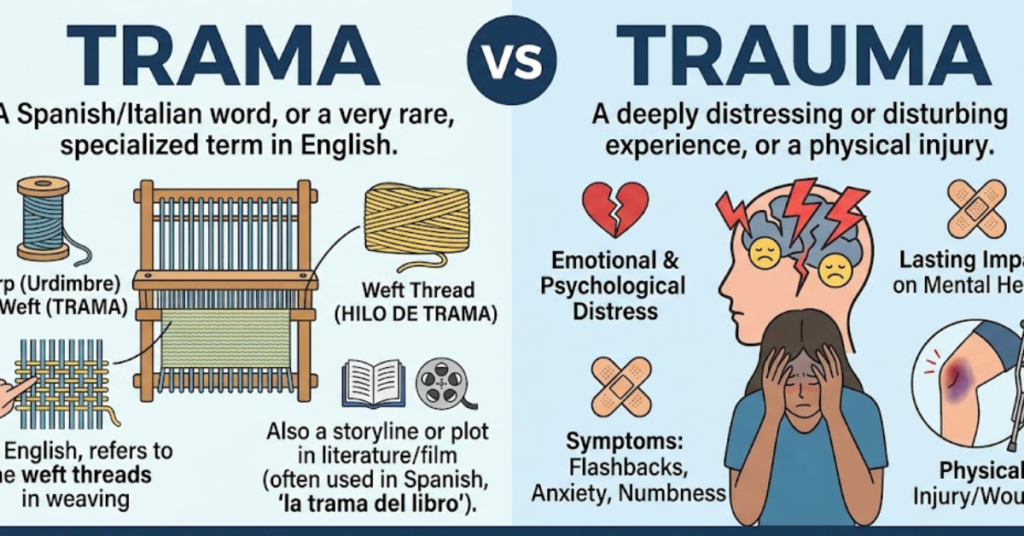
Trauma refers to a deeply distressing or disturbing experience. It can affect a person both physically and emotionally, often leaving lasting effects.
Types of Trauma
Trauma isn’t limited to one form. It generally falls into these categories:
- Emotional trauma
- Caused by stressful or shocking events such as loss or abuse
- Physical trauma
- Refers to bodily injury, like wounds from accidents
- Psychological trauma
- Long-term mental impact from distressing experiences
Everyday Examples
- “He is still dealing with the trauma of the accident.”
- “Childhood trauma can influence adult behavior.”
Is Trama a Real Word?
Why “Trama” Is Incorrect
In standard English usage, trama is not a recognized word. It most often appears due to:
- Typing errors
- Mispronunciation
- Lack of familiarity with the correct spelling
When Might You See “Trama”?
Although uncommon, “trama” can appear in other languages where it may have a different meaning (such as “plot” in some Romance languages). However, in English writing, it’s considered incorrect when you mean “trauma.”
Why the Confusion Happens
The confusion between trama vs trauma is more common than you might think. Here’s why:
- The words sound similar when spoken quickly
- The extra “u” in “trauma” is easy to overlook
- Many English learners rely on phonetic spelling
Quick Memory Trick
Think of “trauma” as having an extra letter because it carries extra weight—both emotionally and physically.
Correct Usage in Writing
Using the correct spelling matters, especially in professional or academic contexts.
When to Use Trauma
Use “trauma” when referring to:
- Emotional distress or mental health issues
- Physical injuries or medical conditions
- Experiences that have long-term impact
Avoid These Mistakes
- Writing “trama” in essays or reports
- Using the incorrect spelling in sensitive contexts
- Assuming both forms are acceptable
Related Terms and Synonyms
To expand your understanding, here are some related words often used alongside trauma:
- Distress
- Shock
- Injury
- Emotional pain
- Psychological harm
Using these alternatives can help add variety to your writing while maintaining clarity.
Common Mistakes to Watch Out For
Even experienced writers can slip up. Here are a few common errors:
- Dropping the “u” in trauma
- Assuming “trama” is an acceptable variant
- Using incorrect spelling in formal documents
A quick proofread can save you from these mistakes.
FAQs
1. What is the correct spelling: trama or trauma?
The correct spelling is trauma. “Trama” is a misspelling in English.
2. What does trauma mean in simple terms?
It refers to a deeply upsetting or harmful experience, either physical or emotional.
3. Is trama ever correct in English?
No, it’s not considered a standard English word in this context.
4. Why do people confuse trama with trauma?
The confusion comes from pronunciation and the tendency to simplify spellings.
5. Can trauma be both physical and emotional?
Yes, trauma can affect both the body and the mind, depending on the situation.
Conclusion
When comparing trama vs trauma, the difference is clear: trauma is the correct and meaningful term, while “trama” is simply a common mistake. Whether you’re writing about mental health, injuries, or life experiences, using the right spelling ensures your message is taken seriously.
Getting these small details right can elevate your writing and build credibility. If you found this guide useful, consider exploring other commonly confused words to sharpen your language skills even further.